
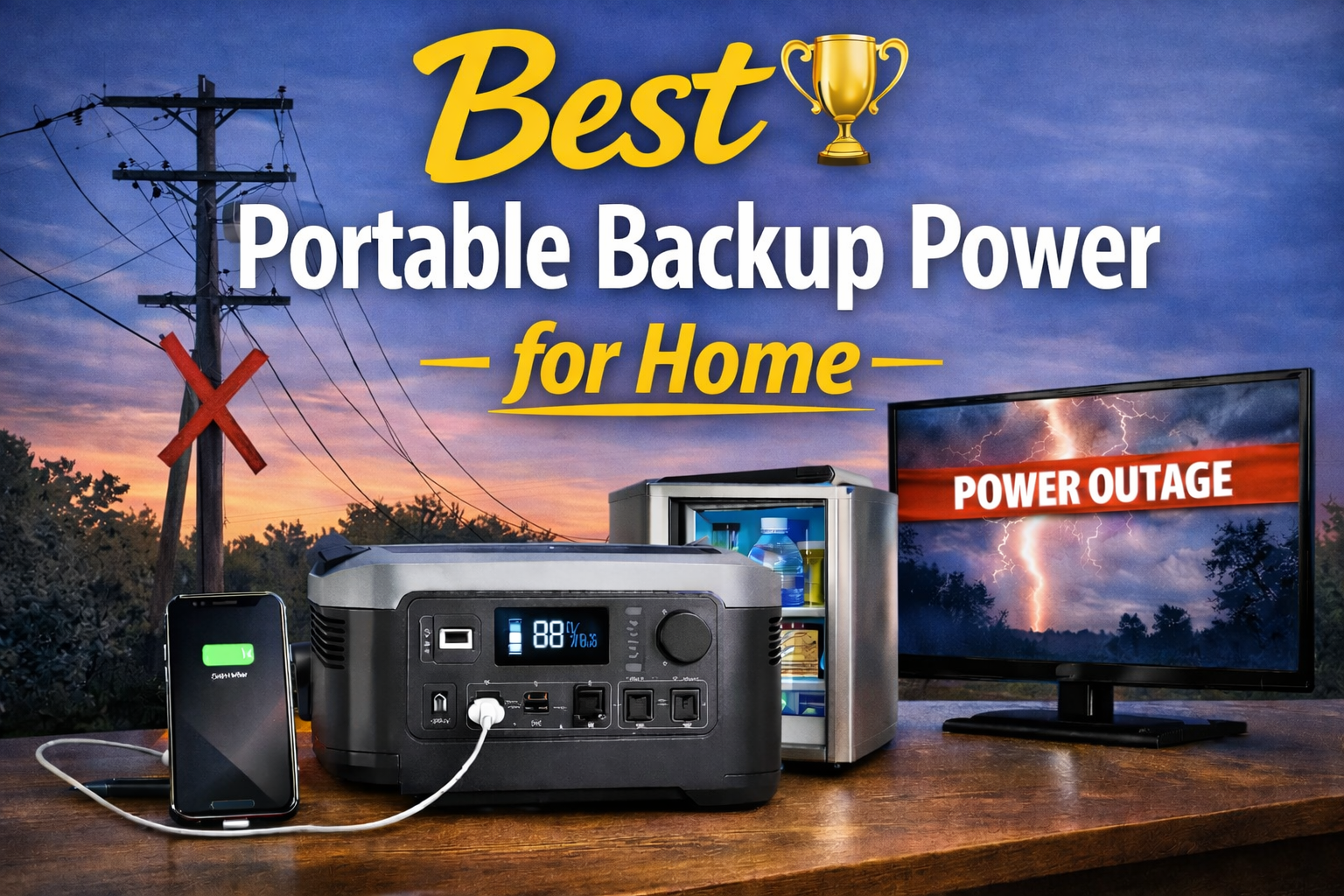
Why Start With Bluetti For Portable Backup – Bottom Line Up Front
Bluetti is a strong first pick for portable backup because it’s built for real home essentials, it’s widely reviewed as appliance-capable,
and you can expand capacity later without replacing the main unit.
Top review sites consistently highlight the AC200MAX’s appliance-ready power and its ability to expand capacity later without replacing the main unit.
- Plug-and-play: unbox, charge, use
- Made for essentials: supports the stuff most people actually need during an outage
- Quiet + indoor-friendly: no fuel, no fumes, no noise
- Add capacity later: supports expansion batteries, so you can extend runtime without replacing the main unit
Pick Your Backup Goal
If you want home backup you can start this week—without scheduling a project or turning it into a remodel—a Bluetti portable power station is the cleanest first move.
It’s plug-and-play, quiet, and useful immediately.
If You’re Powering Basics (Phones + Wi-Fi + Fridge):
choose the Bluetti AC200MAX-class. It’s a strong all-in-one starting point, and you can add expansion batteries later to extend runtime without replacing the main unit.
If You’re Powering Bigger Loads (Window A/C + More Headroom):
step up to a Bluetti AC300 + B300-class system. It’s more modular and built to scale.
What Portable Backup Is
A portable power station is a battery + inverter in one box. You charge it ahead of time, and when the power goes out you plug your devices into it like a large,
quiet power strip.
Most importantly: you plug your stuff into standard household outlets on the unit—the same kind of plugs you use every day for lamps, chargers, routers, and appliances.
Not Just for Campers
You don’t need to be a camper to get real value from portable backup—it’s first and foremost a home resilience tool.
But if you do spend time outdoors (camping, boating, tailgating, job sites, travel), the value goes up because it becomes dual-use:
backup at home when the grid fails, and portable power anywhere else.
What It’s Best For
- Keeping communications up (router/modem, phones, tablets, laptops)
- Keeping food from spoiling (fridge/freezer strategy)
- Keeping the house functional (lights, fans, basic electronics)
- Storm prep without committing to a permanent system
How to Use It in an Outage
In a power outage, your first job is to keep communications up. If you can stay connected—family, updates, weather, work, emergency info—everything else gets easier.
Start here:
- Router + modem (or gateway)
- Phone charging (and a battery bank if you use one)
- A small light so you’re not working in the dark
Then move to comfort and protection:
- Fridge plan (next section)
- Fans, laptops, other essentials
Most outages are measured in hours, not days. Portable backup shines in that window: keep the essentials running and avoid the stress spiral.
If the outage starts looking longer than expected, shift into conservation mode so the same unit can keep helping you well into the next day.
Pro tip: Your Fridge Does Not need 24/7 Power
| • Treat your fridge like a temperature “bank,” not a device that has to run nonstop. | • Keep doors closed and avoid adding warm food. |
| • Run the fridge in timed bursts (let it cool, then unplug and let it coast). | • Freezer tip: keep it shut—it stays cold longer, so it usually needs less frequent power than the fridge. |
With an AC200MAX-class unit, many households can keep a refrigerator going overnight into the next day—and in ideal conditions, longer—depending on the fridge and how often you open it.
Our Pick to Start
We’ll use a Bluetti AC200MAX-class portable power station as our baseline in this series because it’s useful on day one while still being a smart foundation if you expand later.
Now That You Have Yours
- Do one quick practice run on a normal day so you know exactly what to plug in when it counts.
- Sign up for future battery backup deals and tips.